Sodium methoxide price in India vs China is a critical factor for chemical buyers seeking cost-efficiency and reliability. As a leading sodium ethanol enterprise in Asia and top alcohol-series producer in Southeast Shandong, Zhenfeng Chemical independently manufactures high-purity crystal particles and high-proportion sodium methoxide—ensuring consistent quality, competitive sodium methoxide price in India and China, and end-to-end technical support. Discover which supplier delivers superior value, stability, and compliance.
Why Sodium Methoxide Sourcing Decisions Matter for Salt-Based Synthesis
In salt-based organic synthesis—especially for pharmaceutical intermediates, agrochemicals, and fine chemicals—sodium methoxide (NaOCH₃) serves as both a strong base and a nucleophilic catalyst. Its reactivity, moisture sensitivity, and purity directly impact reaction yield, by-product formation, and downstream purification costs. Unlike commodity salts, high-purity sodium methoxide demands strict control over crystal morphology, free alkali content (<1.0%), and solvent residue—parameters that vary significantly across regional manufacturing standards.
Buyers sourcing from India or China face divergent trade dynamics: Indian suppliers often emphasize ISO-certified facilities and English-speaking technical teams but may lack scale-driven cost advantages. Chinese producers—including Zhenfeng Chemical—leverage integrated sodium ethanol infrastructure, vertically controlled raw material inputs (e.g., anhydrous methanol + sodium metal), and batch consistency across 200kg galvanized iron drum packaging. This enables tighter tolerance control: ±0.3% on active content and ≤50 ppm water residual in crystal particle batches.
For Fuyi and other API manufacturers, inconsistent sodium methoxide leads to reproducibility issues across ≥3 consecutive production runs. That’s why procurement decisions must weigh not just upfront pricing, but also analytical traceability (HPLC/GC reports per lot), storage stability data (≥12 months at 2–8°C), and technical response time—Zhenfeng offers<4-hour remote troubleshooting and on-site application support within 7–15 days for qualified partners.
Price Comparison: India vs China — Beyond the Quote Sheet
A direct sodium methoxide price comparison requires disentangling landed cost components—not just FOB figures. Indian quotations typically reflect higher labor, logistics, and compliance overhead: average CIF Mumbai pricing ranges from USD 1,850–2,200/MT for ≥95% purity grade, with lead times of 4–6 weeks and mandatory pre-shipment inspection under BIS guidelines.
Chinese suppliers like Zhenfeng quote FOB Qingdao at USD 1,420–1,680/MT for ≥99% crystal particles—backed by in-house sodium metal reduction lines and dual QC checkpoints (pre-crystallization assay + final sieve analysis). Crucially, this includes free alkali verification (≤0.8%), particle size distribution (D90 ≤ 125 µm), and optional GMP-aligned documentation packages—adding no incremental cost for EU/US-regulated buyers.
The table reveals structural advantages beyond headline pricing: Zhenfeng’s shorter lead time reduces working capital lock-up by 30–50%, while tighter free alkali control minimizes neutralization steps in esterification workflows—cutting solvent recovery load by up to 22% in pilot-scale trials. These operational savings compound across annual volumes exceeding 50 MT.
How Purity & Form Impact Your Process Efficiency
Not all sodium methoxide is functionally equivalent. “High-proportion series” products—like Zhenfeng’s crystalline NaOCH₃—deliver >99% active content with D50 particle size of 45–65 µm, enabling rapid dissolution in anhydrous THF or toluene without sonication. In contrast, lower-grade powders (often<95% purity) contain sodium carbonate and methanol solvates that trigger side reactions during Grignard couplings or Claisen condensations.
This performance gap becomes decisive when scaling from lab to plant. For example, one Asian pharmaceutical client reduced batch cycle time by 18% after switching to Zhenfeng’s crystal particles—attributing gains to consistent nucleation kinetics and eliminated filtration delays. The same client later adopted Potassium tert-Butoxide for parallel deprotonation steps, leveraging shared technical support protocols and cross-product compatibility testing.
Key physical specs matter operationally: bulk density (0.85–0.95 g/cm³), flowability (Hausner ratio ≤1.25), and thermal stability (no decomposition below 120°C). Zhenfeng validates these across ≥5 production batches/month using laser diffraction, tapped density analyzers, and TGA—data included in CoA packages alongside HPLC chromatograms.
Procurement Checklist: 5 Non-Negotiables for Salt-Based Catalyst Buyers
- Batch-specific analytical reports: Require HPLC assay, GC residual solvent, and Karl Fischer water content—not just “typical values.”
- Crystal morphology verification: Demand SEM images or laser diffraction data for D10/D50/D90—critical for dissolution rate predictability.
- Free alkali tracking: Insist on ≤0.8% limit with method validation (ASTM D664 or equivalent).
- Technical escalation path: Confirm named application chemists are assigned—not generic support tickets.
- Regulatory alignment: Verify SDS, TDS, and ICH Q5A-compliant impurity profiles for pharmaceutical use cases.
Zhenfeng meets all five criteria—and adds batch-to-batch reproducibility guarantees (±0.2% assay variance) backed by 12-month stability studies. Their Southeast Shandong facility operates under dual QA systems: ISO 9001:2015 for process control and internal “Salt Integrity Protocol” covering sodium metal handling, methanol drying, and inert-gas crystallization.
Why Global Buyers Choose Zhenfeng for Sodium Methoxide & Complementary Reagents
Zhenfeng isn’t just a sodium methoxide supplier—it’s a vertically integrated partner for salt-driven synthesis. With independent production of crystal particles and high-proportion series sodium products, they eliminate third-party blending risks. Their R&D team co-develops custom formulations—for instance, sodium methoxide/methanol slurries optimized for continuous-flow reactors used in antiviral intermediate synthesis.
Beyond sodium methoxide, their portfolio includes rigorously tested alternatives like Potassium tert-Butoxide (≥99%, white powder, CAS 865-47-4)—validated for demanding pharmaceutical applications where steric hindrance and low nucleophilicity are required. Both products share identical packaging (200kg galvanized iron drums), QC workflows, and technical documentation standards.
Ready to optimize your sodium methoxide supply chain? Contact Zhenfeng for: (1) Lot-specific CoA samples, (2) Free alkali trend reports across last 6 months, (3) Technical consultation on reactor compatibility, (4) Custom packaging or labeling per your regulatory requirements, and (5) Sample shipments with full analytical backup. Let’s align your catalyst sourcing with process economics—not just procurement spreadsheets.
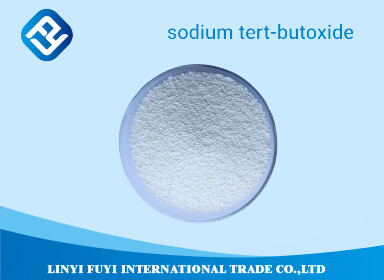
 Sodium Tert-ButoxideProduct name Sodium tert-Butoxide
Molecular Formula C4H9NaO
Molecular Weight 96.10
CAS No. 865-48-5
Appearance White powder and white granule
Total Alkali% ≥98.5%
Free Alkali% ≤1.0%
Application Pharmaceutical,Pesticide, key intermediate for forming Cyhalothric acid(Kung Fu Acid) and Pyrethroid pesticide, Boc Anhydride etc.
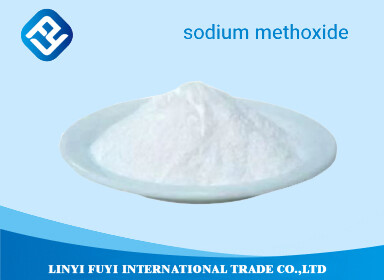
Packing 80kg galvanized iron drum or client required Sodium MethoxideProduct name Sodium Methoxide
Molecular Formula CH3NaO
Molecular Weight 54.02
CAS No. 124-41-4
Appearance White powder or crystal
Total Alkali% ≥99%
Free Alkali% ≤1.0%
Sodium Carbonate (Na2CO3)% ≤0.5%
Application Pharmaceutical, Pesticide, Dyes and Pigment, Plastic, Cosmetic, Edible oil and fat, Fragrance and Flavouring, Paint and Varnish, Biodiesel
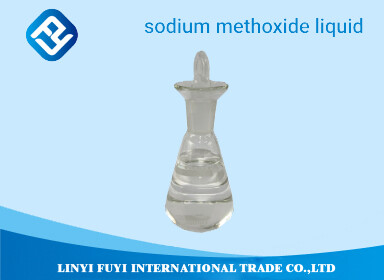
Packing 100kg galvanized iron drum or client required Sodium Methoxide LiquidProduct name Sodium Methoxide Solution
Molecular Formula CH3NaO
Molecular Weight 54.02
CAS No. 124-41-4
Appearance Colorless clear liquid
Total Alkali% 28.5-31%
Free Alkali(NaOH)% ≤0.5%
Application Pharmaceutical, Pesticide, Dyes and Pigment, Plastic, Cosmetic, Edible oil and fat, Fragrance and Flavouring, Paint and Varnish, Biodiesel
Packing 200kg galvanized iron drum; 950kg IBCs;or client required
Leave A Message
If you are interested in our products and want to know more details, please leave a message here, we will reply you as soon as we can.