
Moisture ingress in alkoxide chemical packaging can compromise product purity, trigger unwanted reactions, and create safety risks during storage and transport, even without visible leakage.
For quality control and safety teams handling sodium ethoxide and related alkoxides, the priority is to contain suspect stock and establish where contamination began.
A reliable investigation connects seal integrity, moisture-barrier performance, filling conditions, and handling records with analytical evidence. External inspection alone cannot establish whether packaging caused deterioration.
This guide explains how to distinguish packaging failures from process contamination, select meaningful tests, and define corrective actions that protect product quality and personnel.
First, make the suspect package safe and preserve evidence
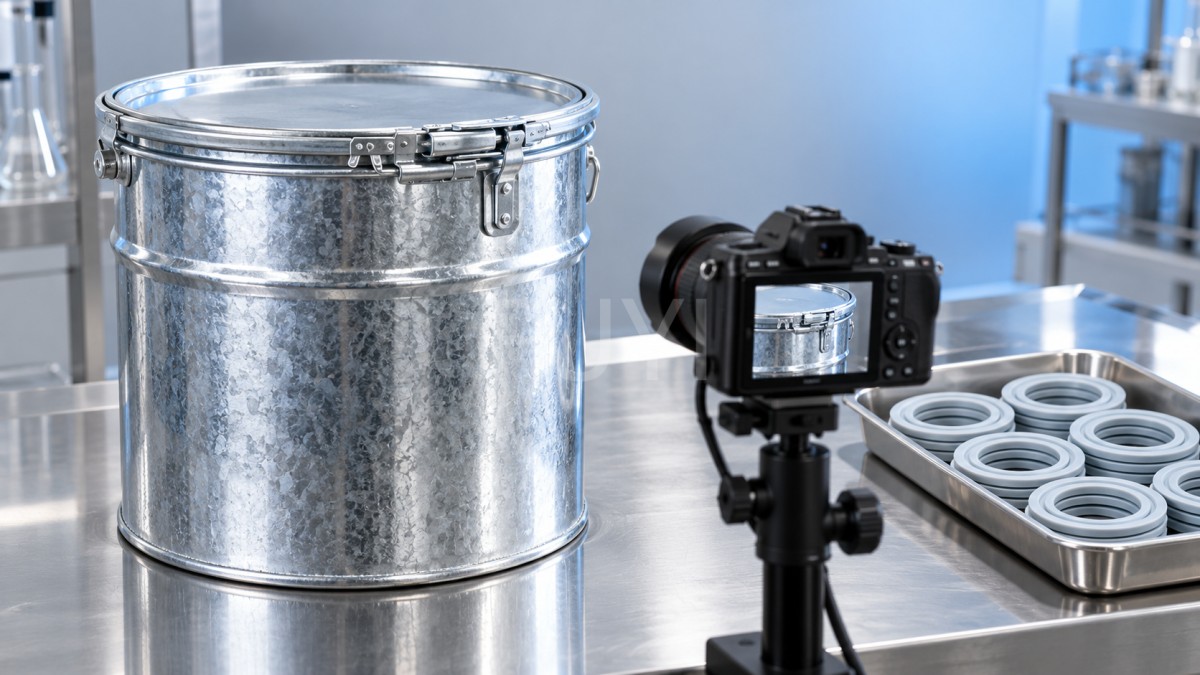
Place affected containers and potentially related stock on hold. Record batch numbers, container identifiers, filling dates, storage locations, and discovery times before moving or sampling them.
Alkoxides react with water to form the corresponding alcohol and sodium hydroxide. Heat release and flammable alcohol vapors can create hazards, depending on conditions.
Assess containers showing bulging, unusual warmth, leakage, severe corrosion, or pressure concerns through your site emergency procedure. Routine inspection should not become an uncontrolled opening operation.
Use the product safety data sheet and approved procedures to determine isolation, personal protection, ventilation, and sampling requirements. Arrange qualified personnel before opening any container.
Do not add water to investigate an unknown residue or improvise pressure relief. Preserve closure components, labels, photographs, and transport records for subsequent failure analysis.
Document whether damage existed before handling. Photograph the lid, closure, gasket area, seams, base, and pallet arrangement so later observations retain their original context.
What evidence distinguishes moisture ingress from process contamination?
Start with a timeline covering manufacture, transfer, filling, closure, storage, shipment, and first opening. Identify every stage where the product or headspace could encounter humidity.
Compare affected containers with unaffected containers from the same batch, other batches using the same packaging lot, and retained samples protected under documented storage conditions.
If a representative pre-filling retain is already abnormal, investigate upstream production and transfer. If only selected shipped containers deteriorate, packaging or handling becomes more plausible.
These patterns guide investigation but do not prove causation. A retain stored differently from shipped stock may not represent the same exposure or aging history.
Check whether failures cluster around a filling shift, closure supplier, warehouse zone, transport route, or customer opening practice. Such clustering often narrows the investigation efficiently.
Repeatedly opened containers deserve separate assessment. Moisture introduced during customer dispensing can resemble transport damage unless opening dates, exposure duration, and resealing practices are documented.
Review evidence of water exposure alongside humidity and temperature changes. Rain-wetted pallets, condensation, and temperature cycling suggest different entry mechanisms and require different corrective actions.
Which chemical packaging components should you examine?
Inspect closure fit, gasket condition, sealing surfaces, threads or clamp assemblies, and drum seams. Look for deformation, trapped powder, scratches, corrosion, and uneven gasket compression.
Compare observed closure settings with the approved specification. Insufficient compression can leave leakage paths, while excessive tightening may distort components or damage some gasket designs.
Verify the actual gasket and liner materials against purchasing records. Substitutions can alter chemical compatibility, compression behavior, and moisture resistance even when dimensions appear identical.
Distinguish a discrete leak from water-vapor permeation. A package may resist liquid leakage while allowing moisture transmission through polymer components over an extended storage period.
Review barrier data at relevant temperature, humidity, thickness, and exposure duration. Film data alone cannot establish the performance of closures, seams, or the assembled package.
Select integrity tests suited to the package design, such as validated pressure-decay, vacuum-decay, or tracer methods. Define acceptance limits and method sensitivity before interpreting results.
Pressure or vacuum testing can damage unsuitable containers. Prefer empty representative packages or qualified test fixtures where possible, and assess compatibility before testing product-containing packages.
A passing test after recovery does not exclude intermittent leakage during shipment. Vibration, stacking loads, thermal cycling, or temporary closure movement may explain otherwise conflicting findings.
How should QC test suspected moisture damage?
Choose measurements that distinguish product degradation from ordinary variation. Depending on the alkoxide and formulation, these may include active-content assay, validated alkalinity measurements, and degradation-marker analysis.
Moisture testing needs particular care because alkoxides consume water chemically. A low measured water result does not necessarily demonstrate that earlier moisture exposure never occurred.
Karl Fischer methods require product-specific validation. Strong alkalinity, reagent interactions, and sample preparation can affect results; confirm suitability, recovery, repeatability, and potential bias before use.
Interpret water measurements alongside active-content changes and appropriate impurity results. Hydroxide may indicate hydrolysis, while carbonate can also reflect carbon dioxide exposure during handling.
Do not treat total alkalinity alone as proof of intact alkoxide content. Hydrolysis products can contribute to the measurement, depending on the analytical method used.
Plan sampling under controlled dry conditions using approved equipment. Record sampling location, opening duration, atmosphere, and transfer steps because sampling itself can introduce moisture contamination.
Where safely feasible, compare material near the closure with material deeper inside. Localized deterioration may support an entry-path hypothesis, although mixing can obscure the pattern.
Appearance provides supporting evidence only. Caking, discoloration, and crust formation may suggest exposure, but conclusions require comparison with specifications, baseline samples, and validated analytical results.
Do filling conditions explain the results better than packaging?
Review container preparation, including washing, drying, storage, and inspection. Residual moisture in a drum, liner, transfer hose, or valve can contaminate material before sealing.
Check filling-area humidity, product temperature, container temperature, and time between filling and closure. Condensation is possible when an exposed surface falls below the local dew point.
If dry nitrogen is specified, verify gas quality at the point of use. Supply certificates alone may miss moisture introduced through distribution lines or maintenance.
Examine purge procedures, exposure times, and filling interruptions. An acceptable room humidity reading cannot compensate for a wet transfer system or an inadequately dried container.
For example, Sodium Butoxide is specified as a white or pale yellow powder with purity of at least 98%, used as an intermediate in organic synthesis.
Its applications include pharmaceutical, pesticide, and fragrance manufacture. For these uses, packaging qualification should support the agreed quality specification throughout the intended storage and distribution period.
The listed supply format is a 200 kg galvanized iron drum or customer-required packaging. Confirm suitability of coatings, closures, gaskets, and liners for the actual formulation.
A nominal drum specification does not establish moisture protection. Product form, residual solvent, storage duration, handling conditions, and the complete packaging assembly all influence performance.
Which corrective actions will prevent recurrence?
Match corrective action to demonstrated cause. Closure defects may require revised assembly controls, gasket replacement, supplier containment, or a more suitable closure design with documented qualification.
If permeation drives deterioration, assess improved barriers against the required shelf life and climate. If contamination starts during filling, prioritize drying, transfer, and atmosphere controls.
For transport-related damage, review pallet support, restraint, stacking limits, and handling practices. Confirm effectiveness using distribution conditions that represent the routes where failures actually occurred.
Set verification criteria before trialing changes: acceptable integrity results, analytical limits, inspection findings, and storage performance. Evaluate enough packages to address the observed failure pattern.
Keep product disposition separate from root-cause confidence. Release, rework, or rejection should follow approved quality procedures and supporting evidence, rather than a visually acceptable container.
A defensible investigation explains both where moisture entered and why controls failed. Combine packaging evidence, analytical results, and process records to support targeted prevention and safe disposition.