
A lower sodium ethoxide price per kilogram does not automatically mean a cheaper wholesale purchase. When a supplier requires more material than your customers can absorb, the discount may be outweighed by financing, storage, and slow-moving inventory. A larger minimum order becomes economical only when purchasing and freight savings exceed those additional costs.
When comparing Sodium Ethoxide supplier wholesale offers, start with the quantity you can realistically sell within the product’s documented storage period. Then compare delivered cost, active sodium ethoxide content, packaging, and payment timing. This prevents an attractive quotation from turning into a stock commitment that weakens margins or delays purchases of faster-moving products.
Find out what the minimum actually applies to
“Minimum order” can describe several different requirements. A supplier may set a minimum per product grade, per package size, per production batch, or per shipment. These conditions have different consequences: a shipment minimum might allow several products, while a grade-specific minimum could require a large commitment to one sodium ethoxide specification.
Ask the supplier to separate its manufacturing minimum from its dispatch minimum. A production batch may be larger than your immediate requirement, but staged deliveries could still be possible. Conversely, a small available stock quantity may carry a higher price because it requires separate documentation, handling, or freight arrangements.
- Grade minimum: Does each concentration or crystalline specification have a separate quantity requirement?
- Packaging minimum: Must orders be placed in full drums, pallets, or another approved package increment?
- Shipment minimum: Can several eligible products contribute toward the dispatch threshold?
- Release minimum: Under a scheduled purchasing agreement, what is the smallest quantity available for each delivery?
Get these answers in writing before comparing quotations. A nominally flexible minimum offers little benefit if the buyer must still pay for the entire quantity upfront or take ownership of stock held elsewhere.
Put crystalline material and solution grades on the same cost basis
A quotation for crystalline sodium ethoxide cannot be compared directly with one for a solution merely by checking package weight. For a solution, part of the shipped mass is solvent. Concentration therefore affects the amount of active material purchased, the freight burden, and the quantity your customers need for their processes.
Cost per kilogram of active sodium ethoxide = delivered material cost ÷ kilograms of active sodium ethoxide received.
Use the agreed specification and relevant batch documentation for this calculation. Confirm whether quoted quantities mean net product weight, gross shipping weight, or active content. For crystalline material, the contractual assay basis should also be clear; do not assume that every kilogram has identical active content across offers.
This normalization is only the first comparison. Customers may require a particular solution concentration or solvent system, so a lower active-content cost does not make another grade interchangeable. Any conversion or repackaging would introduce handling requirements and costs that should not be treated as routine distributor savings.
Build a cost sheet that exposes the MOQ penalty
Use the same cost boundary for every offer. A supplier’s dispatch-point price and another supplier’s delivered price are not equivalent, even when both are expressed per kilogram. Specify the delivery location, quoted Incoterm, and which charges remain outside the offer.
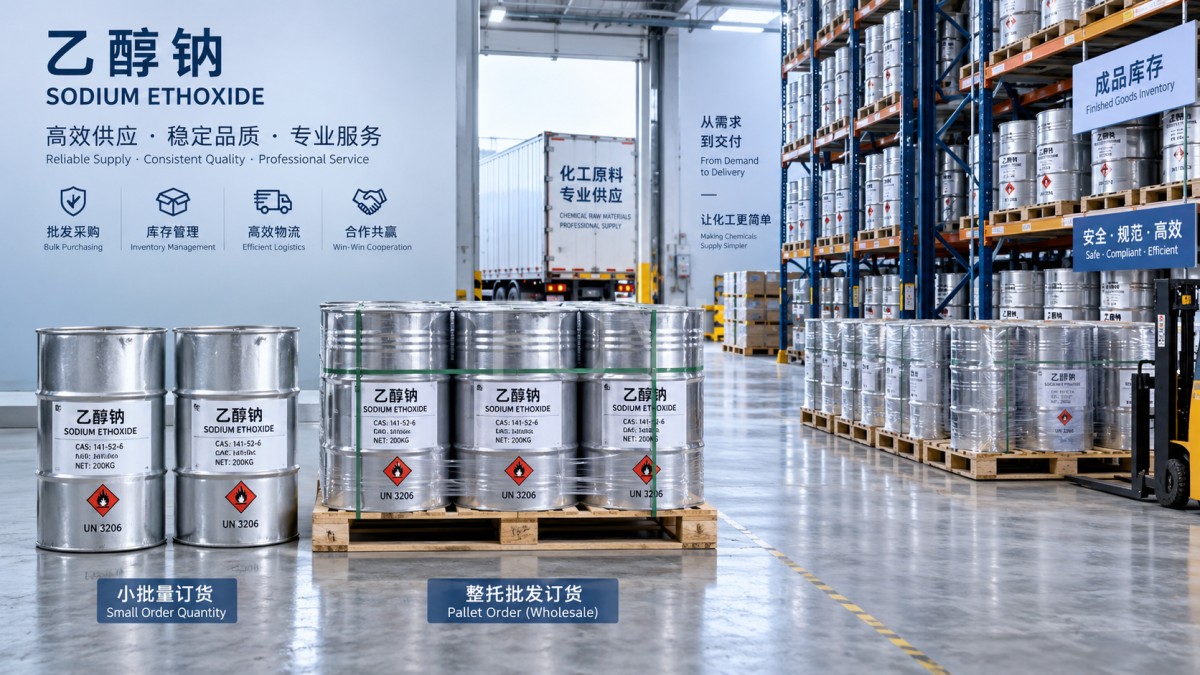
Calculate both landed cost and inventory-adjusted cost. Landed cost includes the purchase and charges needed to receive the shipment. Inventory-adjusted cost additionally considers financing, storage, handling, and a reasonable allowance for stock that may become unsaleable. Base that allowance on your own inventory history and product documentation, not an arbitrary industry percentage.
The larger order is financially preferable only when its purchase and logistics savings exceed its additional carrying costs and stock-risk allowance. Keep recoverable taxes separate from permanent costs, while recognizing that recovery timing can still affect cash flow.
Let customer demand set the practical order ceiling
An MOQ that fits annual sales may still be excessive for the next purchasing cycle. Separate confirmed orders from forecasts, and distinguish repeat demand for the same specification from enquiries that may never become purchases. Stock cannot support turnover if customers need a different concentration, package size, or documentation package.
Estimate inventory coverage by dividing the proposed purchase quantity by expected monthly sales of that exact grade. Then examine whether the resulting coverage fits the remaining documented storage period, customer acceptance requirements, and your available warehouse capacity. Include incoming stock and existing inventory so that overlapping deliveries do not hide excess coverage.
Sodium ethoxide is moisture-sensitive, and storage requirements depend on its form and formulation. Solution grades also require attention to their solvent-related hazards. Review the supplier’s safety data sheet and packaging guidance with warehouse and transport personnel before increasing order volume. Larger purchases should remain within the facility’s actual handling and storage capabilities.
Package size matters independently of total MOQ. Smaller sealed packages may suit fragmented customer demand even if they cost more per kilogram. Buying a larger package and planning to split it later can introduce exposure, equipment, labeling, and quality-control obligations. Price an approved packaging option rather than assuming repacking is free.
Negotiate order structure before requesting another discount
The most useful negotiation may be a change in delivery or payment structure rather than a further reduction in unit price. Present the supplier with expected demand by grade and delivery period, then ask which arrangement reduces your inventory burden without creating an uneconomical production schedule.
- Request comparable alternatives. Obtain quotes for the standard MOQ, a smaller shipment, and a scheduled-release arrangement using the same specification and delivery basis.
- Define ownership of reserved stock. Establish when invoicing, title, risk, and storage charges begin, and who is responsible for stock condition before dispatch.
- Check commitment terms. Identify release deadlines, cancellation charges, price-adjustment rules, and any requirement to purchase the remaining balance.
- Align payment with deliveries. Compare deposits and credit terms alongside unit prices; staged shipments do not necessarily mean staged cash outflow.
A mixed-product order may help meet a shipment threshold, but only when the supplier permits it and transport compatibility is confirmed. For a portfolio that already includes coating solvents or synthesis intermediates, Ethylene glycol monomethyl ether could be discussed as a separate purchase line. Its listed specification includes CAS 109-86-4, purity of at least 99%, and 200 kg galvanized iron drums or client-required packaging. It is not a sodium ethoxide substitute; adding it makes financial sense only against independent demand.
Choose the offer that protects margin after delivery
A smaller order can justify a higher purchase price when demand is uncertain, customers require several specifications, or storage capacity is constrained. A larger commitment is more defensible when repeat demand is established, packaging matches customer orders, and the delivered-cost reduction remains meaningful after carrying costs are included.
Before issuing the purchase order, record the agreed MOQ basis, specification, net quantity, packaging, delivery schedule, payment terms, and quality documentation. Ask for written confirmation of any split-delivery exception. If the supplier cannot clarify these conditions, the uncertainty belongs in the cost comparison—not outside it as an assumption that everything will work out.
Leave A Message
If you are interested in our products and want to know more details, please leave a message here, we will reply you as soon as we can.