
A low quotation becomes difficult to defend when the batch number on a formic acid shipment cannot be matched to its certificate of analysis. Without that connection, a receiving discrepancy may leave you unable to identify the affected containers, confirm their production history, or separate acceptable stock from material that needs investigation.
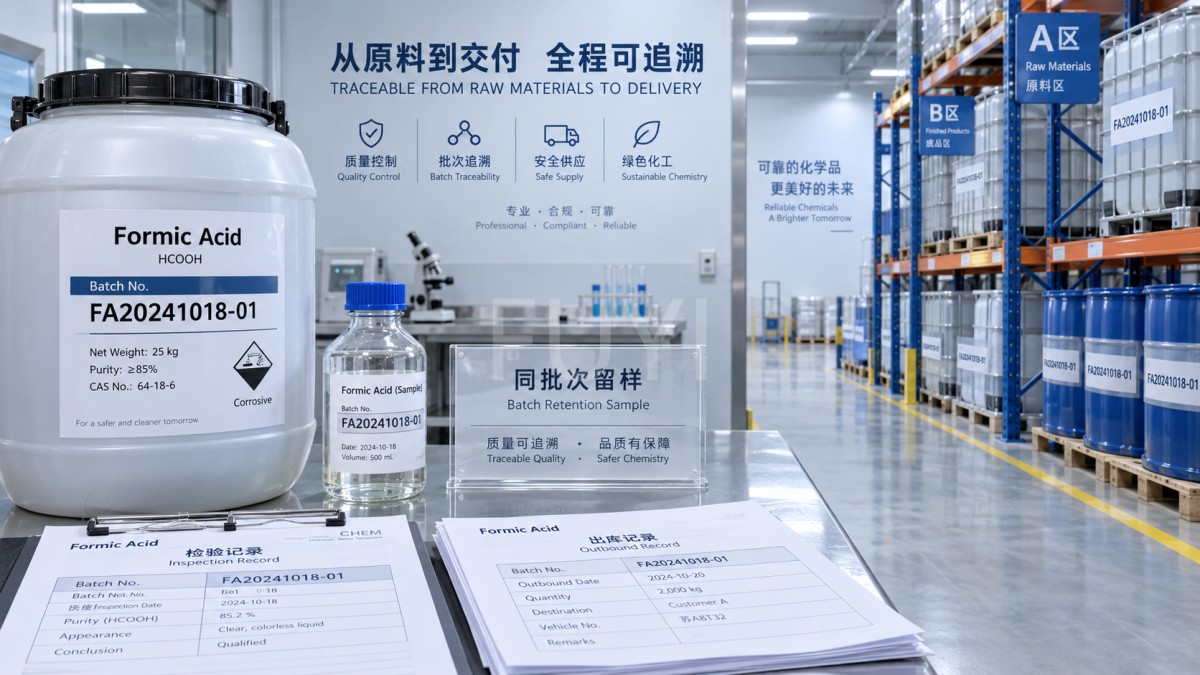
To verify a formic acid producer’s batch traceability, select an actual shipment and follow its identifiers backward to production and input records, then forward to packaging and dispatch. The strongest evidence is a connected record trail, not a batch number printed on a certificate. Before placing an order, ask the supplier to demonstrate that trail and explain any blending, repacking, or third-party handling.
Start with a shipment, not a quality-system presentation
Request a traceability review of a recent completed shipment in the grade and packaging format you intend to purchase. Let the supplier provide a shipment list, then select a batch yourself where confidentiality permits. A supplier-selected example can demonstrate capability, but it may not reveal how consistently the system operates.
Establish who manufactured the material, who issued the certificate, and who packed or loaded it. An exporter may sell material produced elsewhere; this does not automatically make the supply unsuitable. It does mean that the exporter must preserve a verifiable connection to the original producer rather than simply create a new commercial lot number.
Your initial document request should cover:
- A container label photograph or bulk-loading record showing the supplied batch identifier.
- The corresponding certificate of analysis, including grade, test results, and release authorization.
- A production or finishing record identifying the batch and relevant input lots or production intervals.
- Packaging, tank-transfer, or repacking records where applicable.
- The packing list, dispatch record, and shipment identification.
Commercial prices and unrelated customer details can be redacted. Batch identifiers, relevant dates, quantities, and record references must remain visible enough to verify the connections.
Cross-check the records rather than reviewing them separately
A certificate can look complete while belonging to a different shipment. Compare identifiers across the document set, and ask for the mapping whenever two systems use different codes. Matching character strings are useful, but documented relationships between parent batches, packaging lots, and dispatch references are equally important.
Dates should form a credible sequence. Production, sampling, release, filling, and dispatch do not always occur in one fixed order, but the supplier must explain the sequence used. A revised certificate should retain a revision history rather than silently overwrite the original.
Check where the batch boundary actually sits
Ask the producer to define “batch” in its own process. It may mean a discrete production charge, a finishing tank, or a defined interval of continuous production. For continuous operations, traceability should connect the output interval to relevant feedstock records, operating records, storage movements, and quality-release decisions. A number assigned only when an order is packed provides little production traceability by itself.
Request evidence for raw material lots or feedstock deliveries relevant to the selected output. You do not necessarily need proprietary process details. You do need enough information to establish that the producer can identify inputs associated with a suspect finished batch and determine which other batches may share those inputs.
Blending and bulk storage need an extra layer of evidence
When material from several production batches enters one storage tank, the dispatched product may not have a one-to-one relationship with an original batch. Review tank receipts, withdrawals, blending records, and the basis for assigning the final lot. Residual tank contents should be addressed where they affect batch genealogy.
For bulk shipments, check the source tank, loading date, loaded quantity, transport identification, and seal references where used. For drums or intermediate bulk containers, check filling-run records and how individual packages remain associated with their lot. The key question is whether the supplier can define the affected inventory without guessing.
Run a short traceability challenge
Ask the supplier to retrieve records during a live review rather than sending only a prepared folder. Agree on a reasonable response window before the exercise; there is no single retrieval time suitable for every supplier or purchasing situation.
- Trace backward: provide a shipment or package identifier and request the associated release record, production origin, and relevant input references.
- Trace forward: select the production batch and ask which remaining stock and dispatches contain it. Other customers’ identities may be masked while shipment references remain reviewable.
- Reconcile quantities: compare produced or received material with packaged stock, bulk dispatches, samples, losses, and remaining inventory using a consistent quantity basis.
- Test an exception: ask how the system handles a split shipment, relabeling, returned stock, or a corrected certificate.
Quantity reconciliation need not produce perfect equality without adjustments. It should produce an understandable balance with recorded reasons for differences. Watch for double-counted transfers, unsupported loss entries, or a supplier that cannot distinguish held stock from released stock.
A spreadsheet-based system can work if access, revisions, backups, and record ownership are controlled. Dedicated software does not compensate for missing entries or undocumented tank movements.
Separate a correctable omission from a broken chain
A missing document in an email is different from a record that never existed. Ask whether the supplier can retrieve the original evidence, identify its owner, and explain why it was absent. Repeatedly creating documents after questions are raised deserves closer scrutiny, especially when dates or identifiers change without an audit trail.
- Proceed with documented conditions when the chain is intact but document delivery or identifier formatting needs improvement.
- Hold approval pending verification when repacking, blending, or third-party storage has not been mapped to the original batch.
- Do not rely on the traceability claim when the supplier cannot connect the shipped material to release records or establish the scope of affected stock.
Traceability does not prove that formic acid meets your specification. Analytical conformity, suitability for the intended use, and safe handling still require separate review. It does make a failed test or complaint easier to investigate and contain.
Make the evidence part of the purchasing agreement
Compare quotations on the same documentation basis. A lower-priced offer that excludes batch-specific certificates or depends on unidentified repacking may create additional receiving checks, inventory holds, and investigation work. Evaluate those exposures without assuming a numerical saving or loss that has not been established.
Specify the batch identifiers required on labels and shipping documents, when certificates must be supplied, record-retention expectations, and the contact responsible for discrepancy investigations. Require notification when the manufacturing source, packaging location, or traceability coding system changes.
Keep product specifications separate from shared traceability procedures when qualifying multiple chemicals. For example, the listed Sodium Ethoxide has total alkali ≥99%, free alkali ≤1.0%, and sodium carbonate ≤0.5%. Those are product-specific criteria, not formic acid acceptance limits; each product needs its own linked certificate and release record.
For the first delivery, verify the actual labels and shipment records against the approved document trail before accepting the lot into available stock. Treat supplier qualification as incomplete if the demonstration works on historical paperwork but fails on the material you receive.
Leave A Message
If you are interested in our products and want to know more details, please leave a message here, we will reply you as soon as we can.