
An unannounced change in sodium ethoxide purity, solvent composition, packaging, or production site can disrupt quality control and undermine established safety procedures.
For quality and safety teams evaluating a Sodium Ethoxide supplier B2B partnership, clear change notifications are essential to protecting product consistency and maintaining reliable handling practices.
A dependable supplier should communicate changes affecting approved specifications, process performance, handling hazards, or traceability before implementation, with supporting evidence and an agreed review period.
The purchasing decision should therefore consider whether the supplier’s notification system gives your team enough information and time to assess consequences before receiving affected material.
Which changes require advance notice and buyer approval?
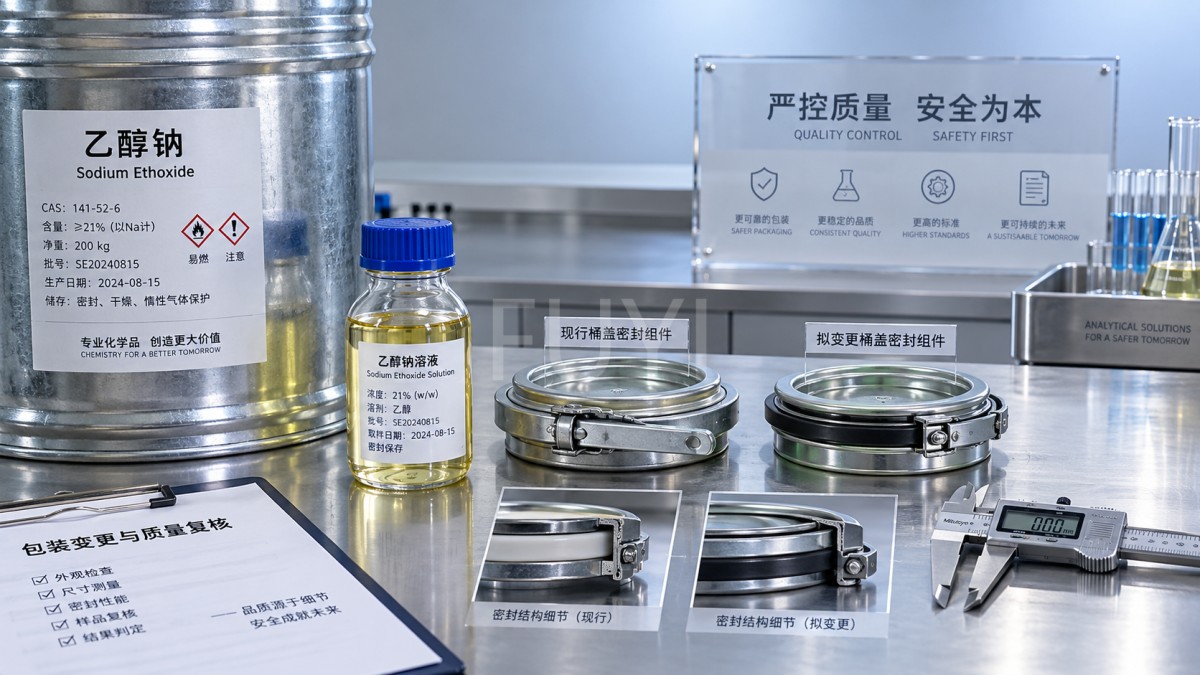
Start with a written change agreement covering the product, its manufacturing process, and its delivery system. A generic promise to communicate significant changes is insufficient.
Define significance against your approved material requirements and handling procedures. A change can matter even when the supplier’s release results remain within existing specification limits.
For example, a different impurity profile may affect reaction selectivity, while a revised closure may require changes to transfer equipment, inspection criteria, or moisture protection.
Reserve prior written approval for changes that could invalidate qualification or materially affect safety. Use notification alone for agreed administrative changes with no technical impact.
How should composition and quality changes be described?
Require the supplier to identify exactly what changes, including numerical limits, measurement units, analytical methods, and reporting basis. Avoid accepting descriptions such as improved quality.
For sodium ethoxide solutions, concentration and solvent composition influence dosing and handling. Changes in water, free alkali, or relevant impurities may also affect downstream reactions.
Total alkali is not automatically equivalent to sodium ethoxide content. Buyers need the supplier’s definitions and test methods before interpreting either value as active concentration.
Ask whether free alkali is reported as sodium hydroxide or another defined equivalent. Confirm how the method distinguishes relevant components and whether results remain comparable.
A change in analytical method also deserves review when the specification stays unchanged. Different endpoints, calculations, or sample preparation can shift reported results without changing material.
Request comparative data from representative batches using the existing and proposed methods. Your laboratory can then assess whether acceptance limits or incoming testing need adjustment.
The listed Sodium Ethoxide Liquid illustrates this need: its pale yellow solution has specified total alkali of 18.5–21% and free alkali of no more than 0.5%.
Those figures establish useful purchasing criteria, but buyers should confirm the solvent, test definitions, and application requirements before deciding whether the specification supports their process.
When do manufacturing and sourcing changes need requalification?
A production site transfer, revised synthesis route, or change to critical raw materials can alter variability or impurity profiles without immediately exceeding routine release specifications.
The notification should identify the affected manufacturing steps, explain the reason for change, and describe controls introduced to maintain the previously agreed quality profile consistently.
For a new site, request evidence relevant to your qualification requirements: production controls, representative batch results, traceability arrangements, and any necessary updates to approved supplier records.
Changes involving shared equipment, cleaning procedures, reprocessing, or outsourced manufacturing deserve attention when they could introduce contamination or change characteristics important to your intended application.
Pharmaceutical intermediates may require tighter impurity review than some industrial applications. Set evidence requirements around the actual use, customer commitments, and applicable regulatory obligations involved.
Where performance uncertainty remains, obtain a clearly identified evaluation sample. Agree whether laboratory testing, a controlled production trial, or additional incoming inspection will resolve it.
Which packaging and safety changes must reach the safety team?
Packaging changes should name the revised container, contact materials, lining, seals, closures, and nominal fill quantity. Describing a replacement as equivalent does not establish compatibility.
Available configurations include 180 kg galvanized iron drums, 950 kg IBCs, or customer requested packaging. Each proposed configuration still requires compatibility and handling suitability checks.
A different IBC connection can affect transfer procedures; a revised drum closure can affect inspection and opening practices. Review these details before the first delivery.
Sodium ethoxide reacts with moisture, and solvent containing formulations can present additional fire hazards. Base controls on the actual composition and current safety data sheet.
Ask for revised SDS sections to be identified explicitly, covering classification, handling, storage, exposure controls, incompatibilities, emergency measures, and transport information where any have changed.
The safety team should assess ventilation, ignition controls, transfer equipment, spill arrangements, and required protective equipment. Changes may also require updated procedures and operator training.
Urgent new hazard information should reach designated contacts immediately, with affected batches identified. It should not wait for the next commercial discussion or document renewal.
What should a useful change notification contain?
A notification should let your team determine scope, risk, and required action without reconstructing the history. Require a controlled document with an identifiable revision number.
- Product identification, affected grades, and supplier change reference.
- Current and proposed conditions, with a clear explanation of differences.
- Reason for the change and the supplier’s impact assessment.
- Supporting specifications, comparative batch data, and revised documents.
- Proposed implementation date and first affected batch or shipment.
- Availability of evaluation samples and previously approved stock.
- Named technical contact, response deadline, and requested buyer decision.
Require supporting evidence proportionate to the change. A manufacturing transfer may justify qualification data, while a corrected administrative address may only require a revised document.
Certificates of analysis should retain clear batch identification and applicable specification references. If reporting changes, obtain an explanation so incoming inspectors can interpret results correctly.
Safety data sheets and certificates of analysis serve different purposes. Neither replaces a change notice explaining what changed, when it starts, and which deliveries are affected.
How much notice is enough, and how should approval work?
There is no universal notice period suitable for every buyer. Agree contractual timelines based on sampling, analytical work, production trials, customer approvals, and inventory planning.
For example, a buyer might negotiate 90 days for significant planned changes, with longer periods for site transfers. This is a contractual example, not a universal requirement.
Measure adequacy by whether the review can finish before implementation. A nominal notice period offers little protection if samples or essential evidence arrive too late.
Define when the review clock begins, normally after receipt of a complete package. Also agree how missing information, objections, and implementation delays will be handled.
For changes requiring approval, state that silence does not constitute acceptance. The supplier should obtain written authorization before shipping changed material against the approved specification.
Route notices to quality, safety, procurement, and the relevant process owner. Assign one coordinator to collect decisions and prevent contradictory instructions reaching the supplier externally.
Record the decision as approved, conditionally approved, or rejected, with reasons and conditions. Conditional approval might require enhanced incoming testing for an agreed number of batches.
How can buyers prevent changed batches from entering unnoticed?
Approval must connect to physical deliveries. Require the supplier to identify the first affected batch and explain how existing stock will be distinguished from changed material.
Agree whether shipping documents, labels, or certificates will carry a change reference. Link that reference to your material master, receiving instructions, and qualification records internally.
If unapproved changed material arrives, place it on hold pending assessment. Determine disposition through your quality and safety procedures rather than relying on verbal assurances.
During supplier evaluation, request an anonymized past notification and walk through a realistic scenario. This reveals whether the supplier can provide evidence, traceability, and timely escalation.
Choose a supplier whose change process you can verify
A strong B2B sodium ethoxide supplier relationship depends on agreed notification triggers, usable technical evidence, realistic review periods, and batch identification that survives through delivery.
Before approving a supplier, confirm that quality and safety contacts can assess changes before implementation. Make these commitments part of the purchasing and quality agreements.
The decisive question is whether your team can identify, evaluate, and control a proposed change before affected material reaches production. That capability makes supplier communication valuable.